Educational practice only. These modules teach observation and recording. They do not diagnose disease in a specific colony or prescribe treatment.
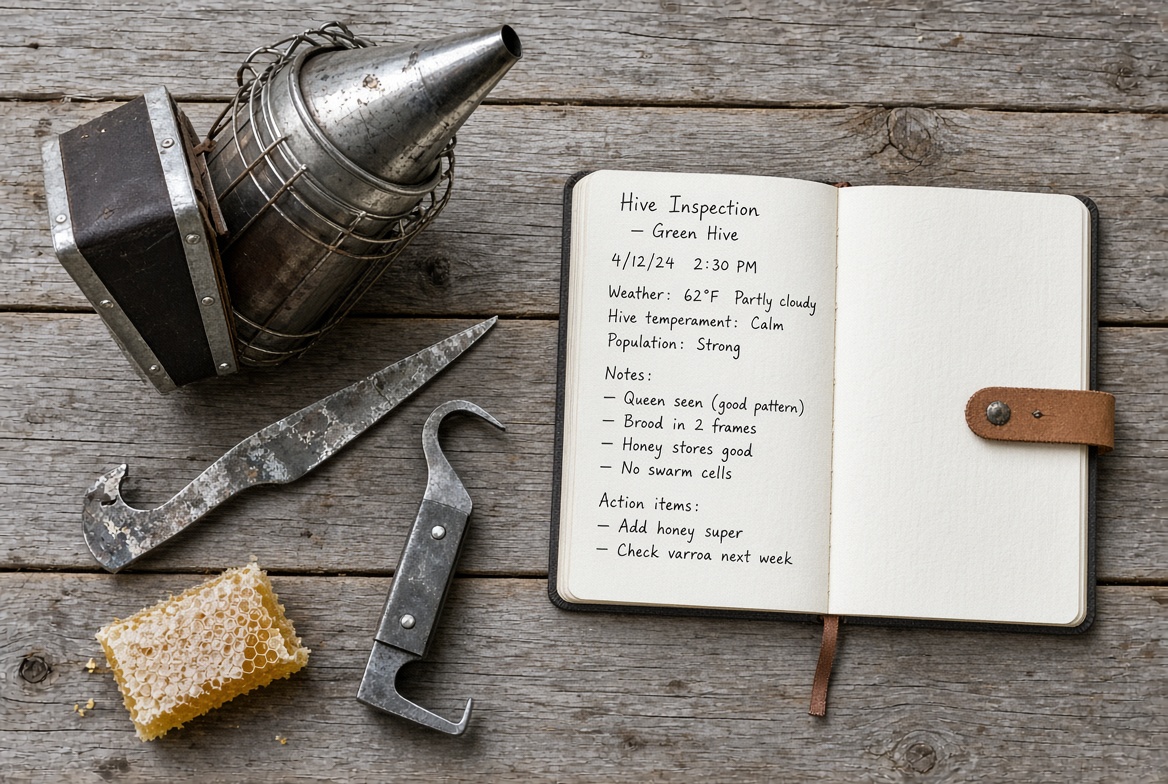
Smoker, hive tools and inspection notebook on wood

Foundation · Sessions 40–60 min

01 — Approach sequence

How you arrive at the hive, light the smoker, open the box, and work through frames without unnecessary disturbance. Sequence matters more than speed.

What you work on

Protective setup and smoker readiness. Opening order (outer frames first when appropriate). Holding and turning a frame so the colony stays on the comb. Closing without crushing bees. A short checklist that runs before the first frame is lifted.

How practice works

Scenario cards describe a colony’s temperament and weather. You write the sequence you would follow, then compare it with a model approach. Common shortcuts — searching for the queen before noting stores — are marked as sequence faults.
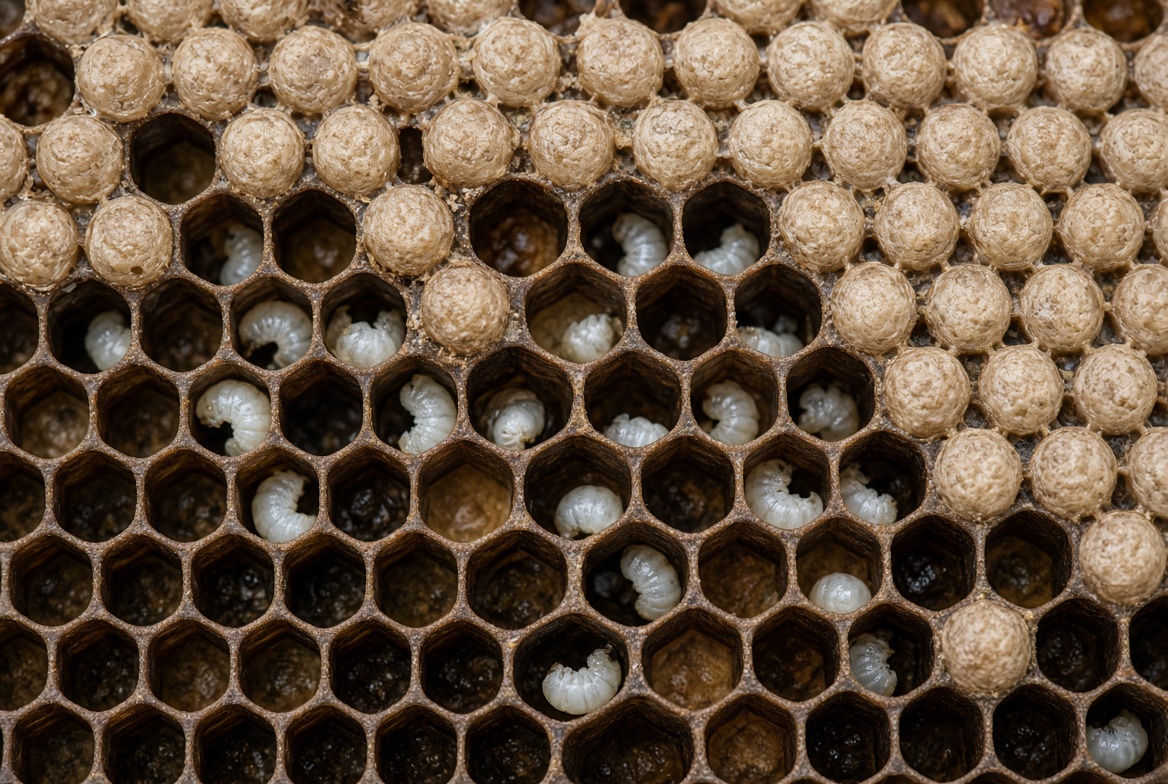
Close-up of capped brood and open larvae cells

Core observation · Sessions 50–70 min

02 — Brood pattern reading

Learning to describe what is on a frame: eggs, larvae, capped brood, solid or spotty pattern, and the difference between a pattern that is simply uneven and one that raises concern for further investigation.

What you work on

Identifying brood stages from photographs and written descriptions. Marking solid versus broken patterns. Noting drone brood versus worker brood. Recording what is present without inventing what is missing.

How practice works

You receive frame scenarios and complete a brood checklist. Model answers show where learners typically over-interpret a normal variation as a problem, or miss an empty brood area that should have been noted.

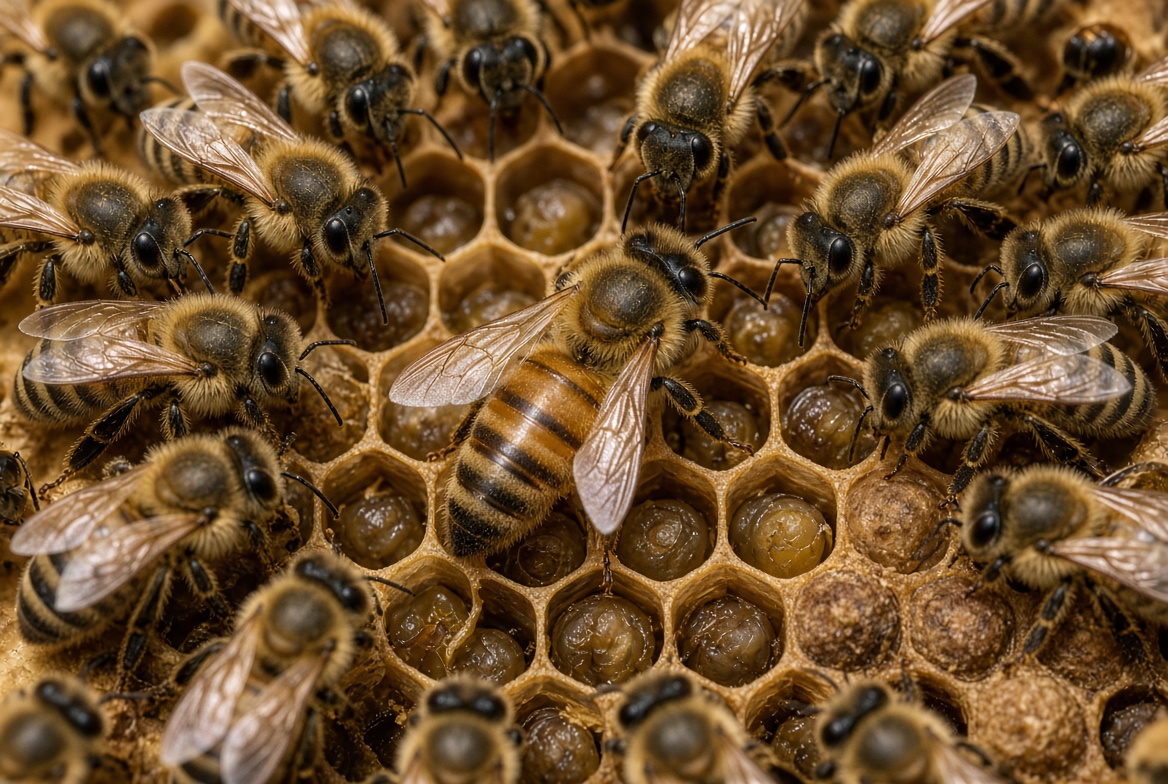
Queen bee on comb surrounded by workers

Core observation · Sessions 45–65 min

03 — Queen and stores indicators

Seeing the queen when possible, and inferring her presence from eggs and young larvae when she is not found. Assessing honey and pollen stores in plain language. Noting swarm cells without treating every cell as an emergency.

What you work on

Queen indicators versus direct sighting. Stores described as light, adequate, or heavy relative to colony size and season. Swarm cups versus occupied queen cells. A short note format that separates observation from planned action.

How practice works

Scenarios mix strong and weak stores with present or absent queens. You write notes under forced headings, then compare with a model record that keeps observation and interpretation separate.

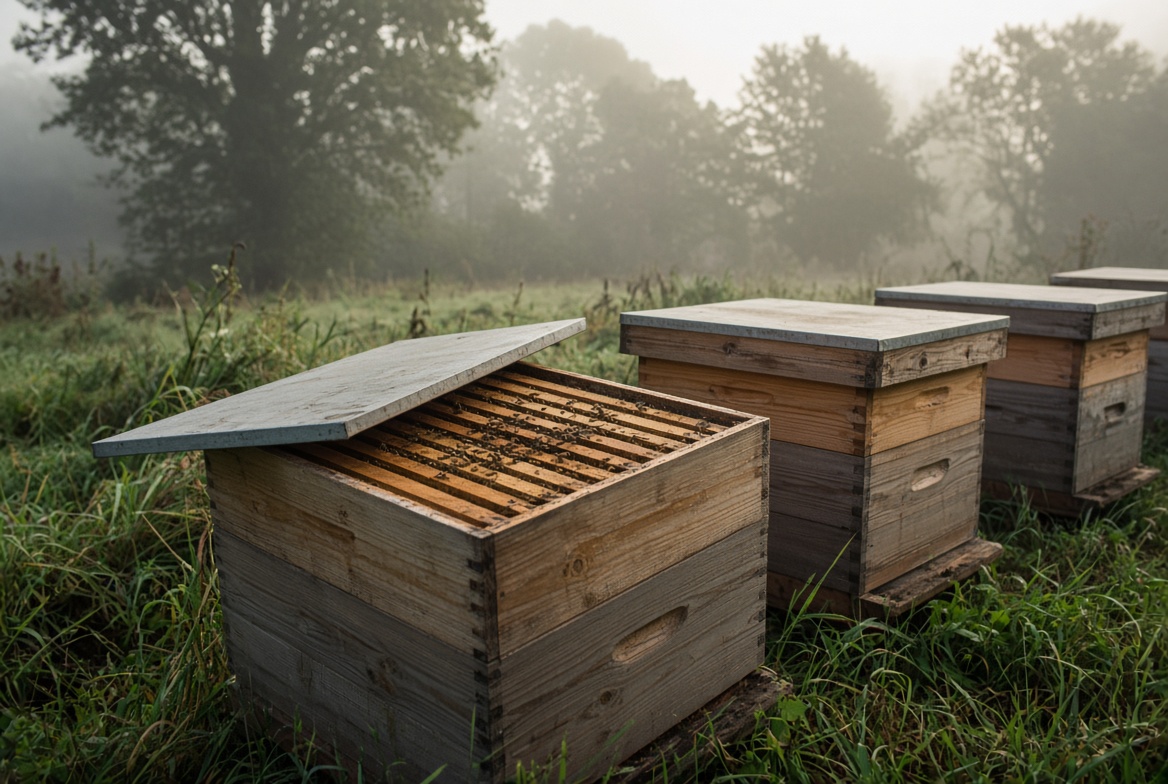
Open hive boxes in a countryside apiary

Diagnostic judgement · Sessions 50–70 min

04 — Normal variation versus concern

Practice distinguishing ordinary seasonal and colony variation from patterns that warrant closer attention or professional advice. The module does not teach disease treatment; it teaches careful description.

What you work on

Spotty brood that may be normal for a young queen versus patterns that are consistently broken. Chalkbrood-like cells as an observation category, not a diagnosis. When to note and re-check versus when to seek qualified advice.

How practice works

Side-by-side frame comparisons. You classify each as “within normal variation for season and colony age,” “re-check next inspection,” or “seek qualified advice.” Model classifications explain the reasoning without naming treatments.

Handwritten hive inspection notes in a field notebook

Recording · Sessions 40–55 min

05 — Inspection recording

Turning what you saw into a short, structured note that remains useful weeks later. Date, weather, temperament, brood, stores, queen indicators, and any planned follow-up — without narrative padding.

What you work on

A fixed set of fields. Abbreviations that stay consistent. Separating observation from intention (“add super next week”) so later readers know what was fact at the time. Practising complete notes from incomplete memory scenarios.

How practice works

You watch or read a simulated inspection, write a full note under time pressure, then compare field-by-field with a model. Missing fields and mixed observation/action language are the main feedback points.

Access

Module materials are provided after correspondence with the collective. Real colonies and protective equipment remain the learner’s responsibility. Plucjurn does not run live apiary visits as a standard service and does not sell beekeeping equipment.