Field method
Inspection improves when practice is specific. Plucjurn organises each session around a frame scenario, a forced checklist, and a comparison with a model record.
Scenario, checklist, compare
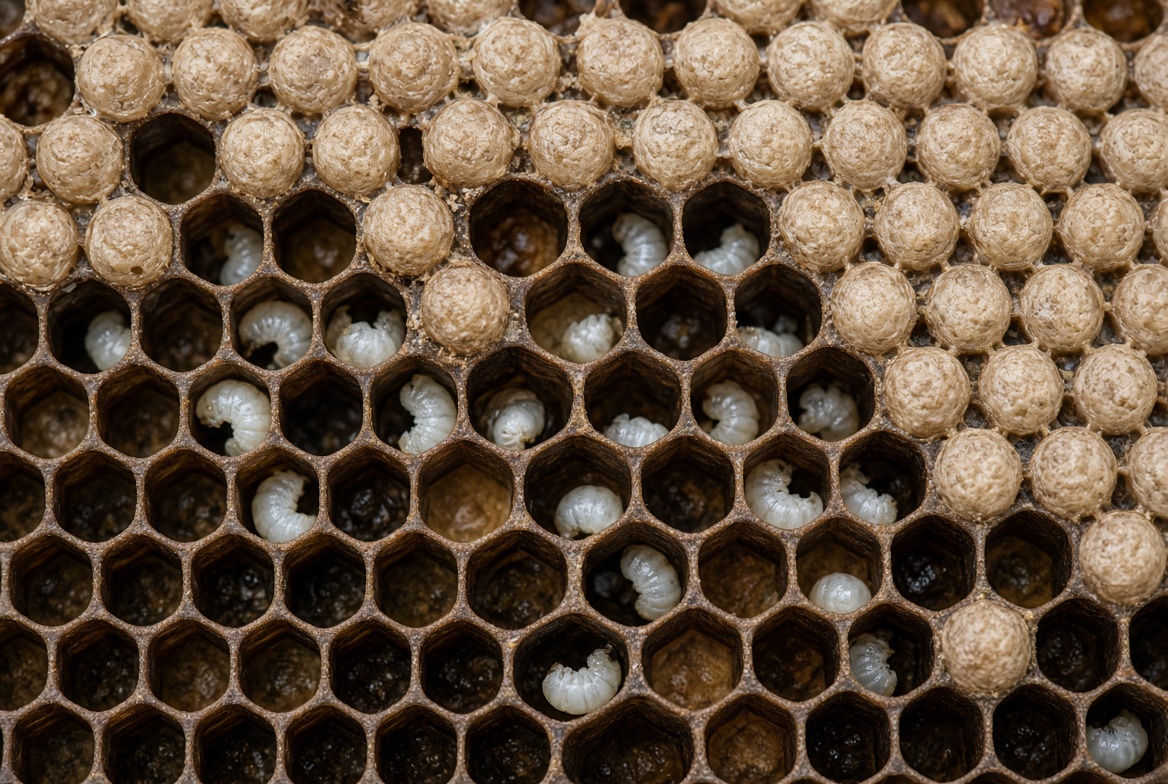
A session begins with a short reminder of the observation category for that module — for example brood stages, or stores relative to colony size. Then a scenario: a set of frame descriptions or photographs that stand in for what a beekeeper would see on opening a box.
You complete a diagnostic checklist with fixed fields. The checklist does not ask “is the colony healthy?” It asks what brood stages are present, whether the pattern is solid or broken, whether stores are light or adequate, and whether the queen was seen or only inferred.
Finally you compare your notes with a model record. Differences are discussed in terms of missed fields, over-interpretation, and sequence faults — not in terms of personality or “talent.”
Session sequence
Choose a module
Beginners start with approach sequence and brood pattern reading. Modules can be repeated; the materials are built for return practice after real inspections.
Work a frame scenario
Read or view the scenario without jumping to conclusions. Note only what the materials show. Time pressure is mild; accuracy of description matters more than speed.
Complete the checklist
Fill every field. Empty fields are more useful than vague language. Separate observation from any planned action.
Compare with the model
Mark where your record diverged: missed brood stage, stores overstated, queen “seen” when only eggs were present. Keep the marked sheet.
Carry one habit to the next real inspection
After practice, choose a single focus for the next time you open a colony — for example always noting stores before searching for the queen.
What the method does not provide
- Diagnosis or treatment advice for a specific colony
- Live apiary tutoring as a standard service
- Certificates that replace official inspection requirements
- Equipment sales or brand recommendations
- Promises about colony outcomes or honey yield
Those sit outside Plucjurn’s educational scope. For disease or treatment questions, learners are directed to qualified local advisors and official guidance.
Pacing
Most learners work one module session per week during the active season, and review recording modules in winter. A realistic session is 45 to 70 minutes. Short review of previous checklists before a real inspection is encouraged.